Architecture has changed. Have you?
posted on Jun 22, 2026
Architecture Has Changed. Have You?
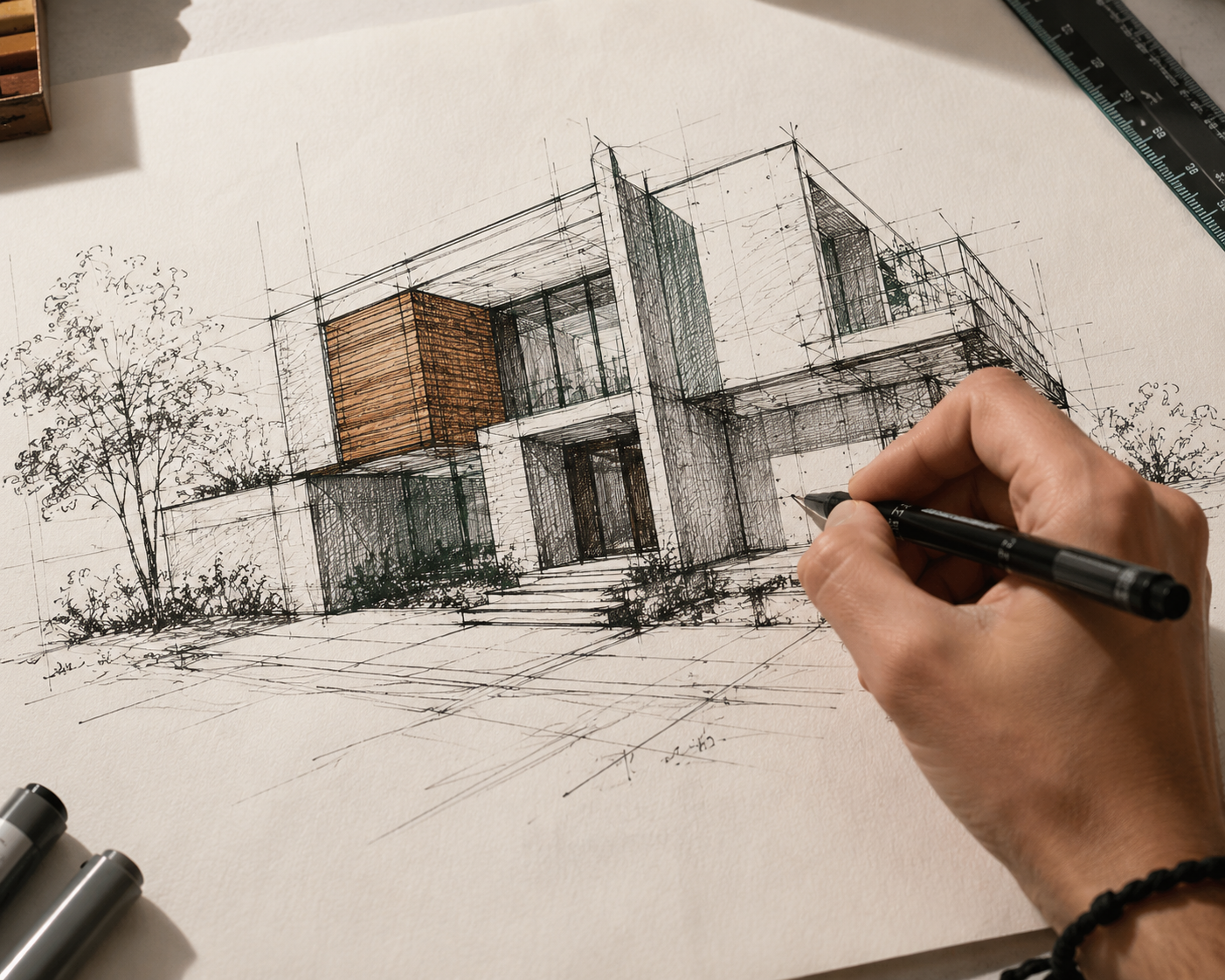
The drawing board did not disappear. It made room for satellite imagery, climate models, and a generation of students who think in three softwares before lunch. A long read on the discipline most students still imagine the way their parents did.
The MBS campus in Sector 9, Dwarka, New Delhi. Photograph from the college archives.
A Timeline · Architecture Across Four Chapters
From walls and roofs to smart systems and citizens.
Four overlapping eras, each absorbing the one before it. None of these chapters has truly ended. They live on inside the studios of the next.
Chapter One · Pre 1900 — Traditional
Structure and aesthetics. A wall holds up a roof. Both have to be honest, and both have to be lovely. Materials are local. Decisions are made by hand, with the eye of the master mason.
Materials: Stone, Brick, Hand Drawing
Chapter Two · Early 1900s — Modern
Function takes the foreground. A house becomes a machine for living. Light, air, circulation, and standardisation matter as much as façade. The architect speaks the language of the engineer.
Materials: Concrete, Glass, Plan Diagrams
Chapter Three · Late 1900s — Contemporary
The building sits inside its environment. Sustainability and digital tools enter the studio. A project is judged by what it gives back, not only by what it takes. Software becomes a co-author.
Materials: CAD, BIM, Daylight Study
Chapter Four · Today — Intelligent
Buildings respond, learn, and listen. AI tests a thousand variations of a plan before sunrise. Neighbourhoods get designed with data on how people actually move through them. The architect becomes a careful editor.